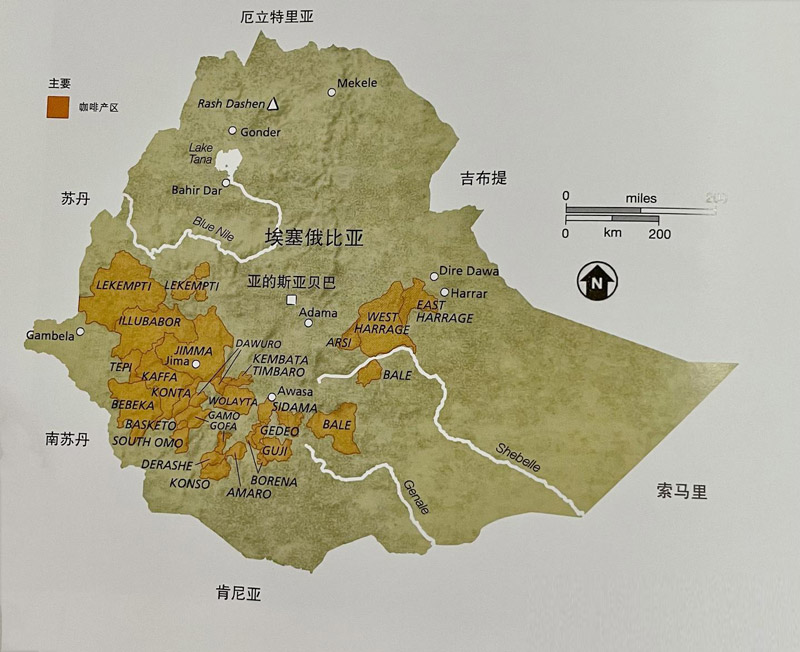
Ethiopia
Among all coffee-producing countries, Ethiopia is perhaps the most notable one.
Ethiopian coffee, with its bold floral and fruity aromas, has opened the eyes of many coffee professionals to the diversity of coffee flavors.
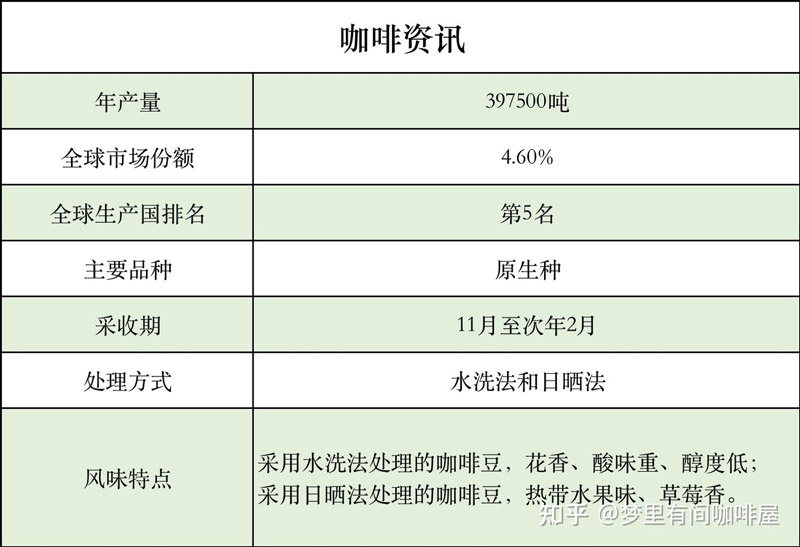
I. Introduction to the production area
Ethiopia is regarded as the "cradle of coffee".
Unlike many other coffee-producing countries, coffee in Ethiopia is not an "imported product" from colonizers, but rather entirely indigenous wild or "semi-wild" coffee trees, growing on plateaus at an altitude of 1500 meters, covering approximately half of the country's total land area.
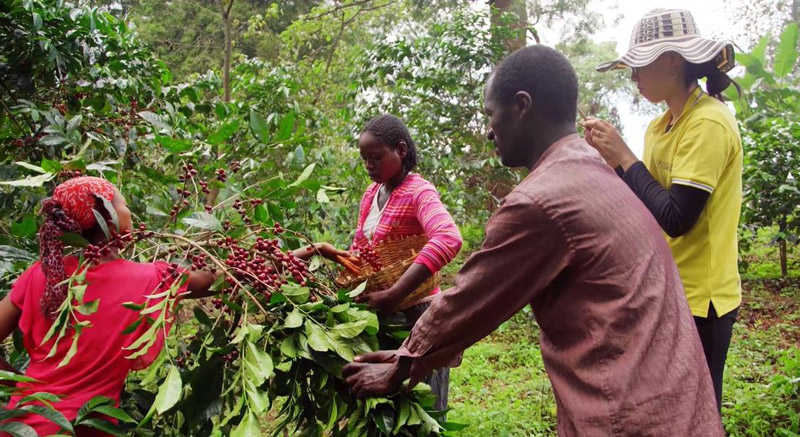
Here, there are almost no artificially cultivated coffee trees and coffee plantations. Coffee trees grow in gardens, forests, or semi-forest areas, without the need for pesticides. 90% of its coffee production is accomplished by over 700,000 small producers.
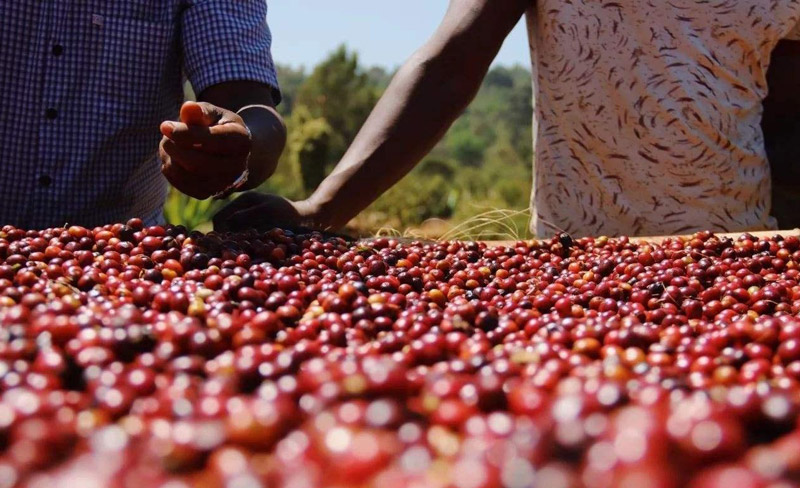
Ethiopia boasts a wide variety of coffee trees, including the Arabica species
The vast coffee forests, home to multiple coffee varieties, hold the promise of high-quality coffee in the future.
II. Climate
The climate experience in Ethiopia is polarized, with one half being humid rainforests and the other being arid deserts and Gobi regions.
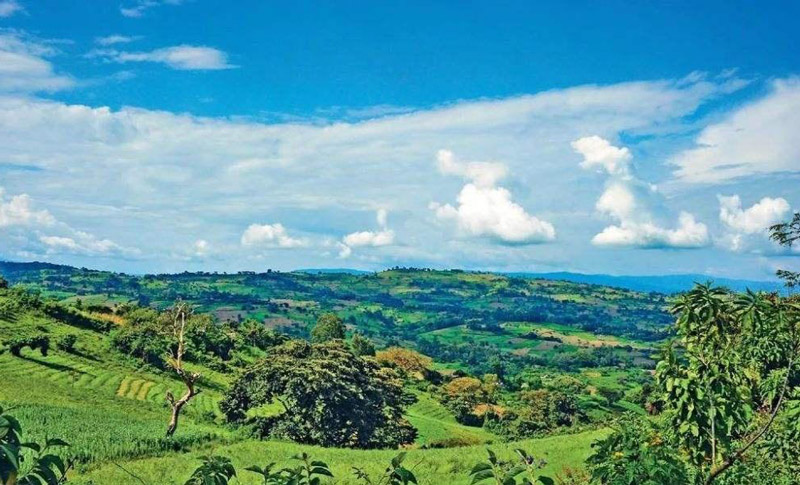
Ethiopia has many high mountains covered by tropical cloud forests, and coffee is mainly grown on the highlands.
The temperature in high-altitude areas is relatively low, which leads to fewer pests and less need for pesticides. Additionally, the slower ripening speed allows coffee trees to have longer periods to absorb nutrients. The rainforest is dominated by tall trees, and coffee trees take shelter under these trees, using fallen leaves as protective mulch and nutrients, enjoying an excellent growth environment.
III. Coffee production system
Ethiopian coffee can be divided into three categories based on its cultivation method.
1. Forest Coffee
Most of these wild coffee trees grow in the southwest of Ethiopia, often surrounded by numerous shading plants. The coffee trees themselves are also a mix of multiple varieties. Their reproductive capacity and yield are not as good as other artificially selected high-yield varieties.
2. Courtyard coffee is also known as rural coffee
This type of coffee tree is usually planted around human and animal habitats, with less natural shade. The management of such shade trees is also more active, such as frequent pruning to prevent the coffee trees from being overly shaded. Many producers apply fertilizer. Ethiopian coffee mostly falls into this category.
3. Large-scale farm coffee
This type of coffee is sourced from large, densely planted agricultural fields. Standardized farming methods are employed, including pruning, mulching with decomposed soil, fertilization, and the selection of high disease-resistant varieties.
IV. Coffee Flavor
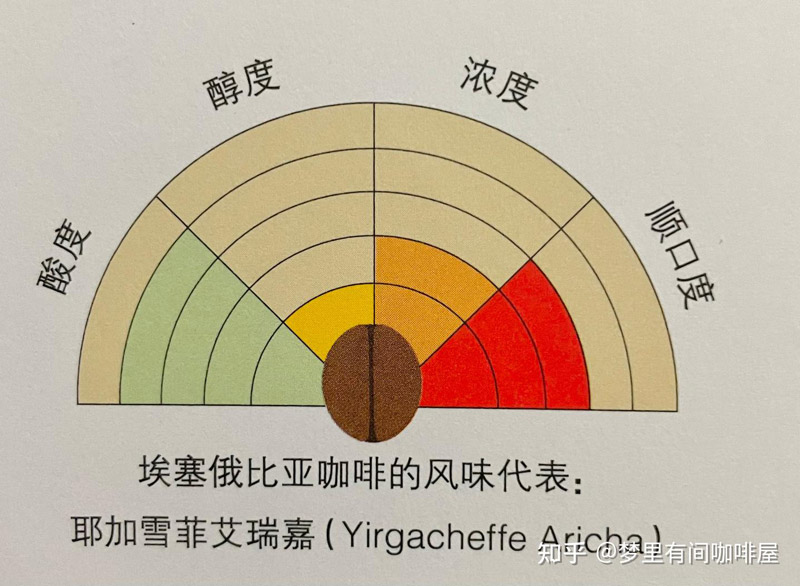
The flavor of Ethiopian coffee is highly diverse, ranging from citrus (such as bergamot) floral scents to candied fruit and even tropical fruit aromas.
The best washed coffee may exhibit an elegant, complex, and delicious aroma,
The best sun-dried coffee will exhibit a bold fruity aroma and an unusual charming scent.
V. Main production areas
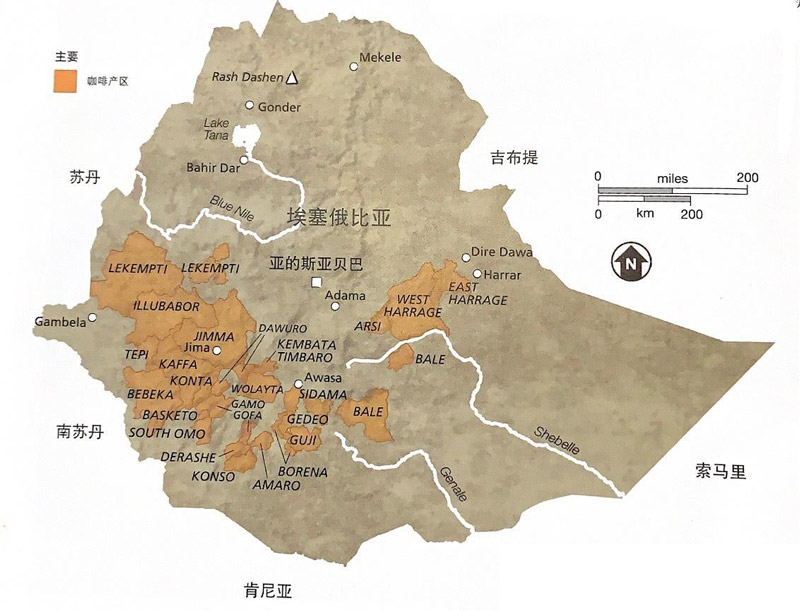
1. Sidamo
Altitude: 1400-2200 meters
Harvesting period: October to January of the following year
Variety: Native variety
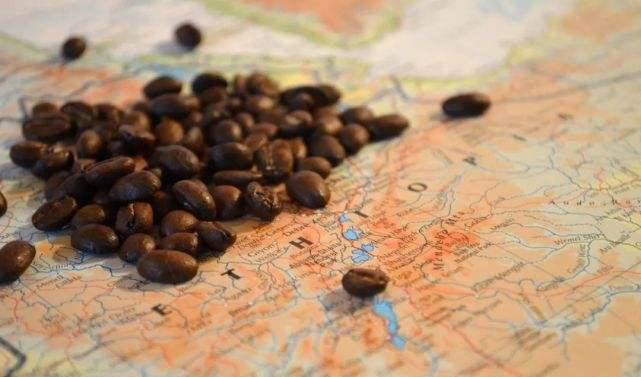
In order to enhance the promotion of the uniqueness of its domestic coffee, the Ethiopian government applied for patents for three production area names in 2004; Sidamo was one of them (the other two being Harrar and Yirgacheffe).
Sidamo is a renowned specialty coffee region in southern Ethiopia, bordering Kenya.
The water-washed Ceylon tea is light green, with small, oval-shaped beans. The fruit is plump, with good average quality. The aroma is fragrant and mellow. Once you taste a drop, the aftertaste is endless, with a wild beauty.
The coffee flavor of Ceylon is highly diverse. The country boasts a diverse terrain, including towering mountains, highlands, plateaus, valleys, and plains. Different soil types, microclimates, and countless native coffee species contribute to the distinct differences and characteristics of the coffee produced in various towns.
2. Lim
Limu
Altitude: 1400-2200 meters
Harvesting period: November to January of the following year
Variety: Native variety
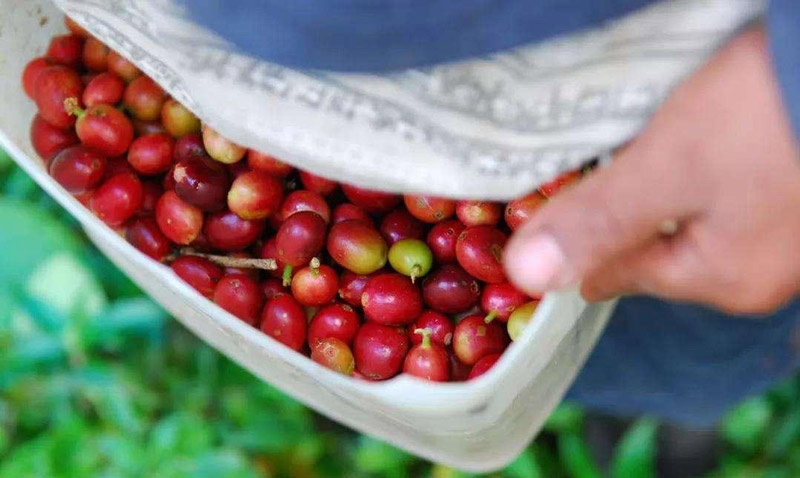
Most of the producers in this area are relatively small in scale, but there are several large state-owned coffee gardens.
Generally speaking, the Limu region mainly produces washed beans, which have a milder taste than the Sidamo region and often have citrus characteristics; Although it's not like Xidamo or Yegashefe
The coffee in the production area is equally famous, but there are also many coffee beans with unique flavors produced.
The performance of floral and citrus aromas is also inferior to that of Xidamo and Yejia Xuefei, but it has an additional scent of green grass, cocoa, and sandalwood.
3. Ji Ma
/Jima Jinma
Altitude: 1400-2000 meters
Harvest period: November to January of the following year
Variety: Native variety
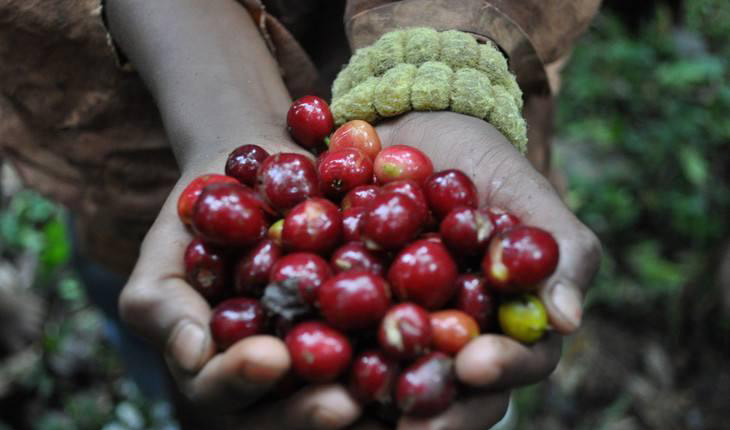
Most coffee in Ethiopia is produced in this area located in the southwest, and the name of this area can also be written as "Jimmah", "Jimma" or "Djimmah".
Sun dried Keemun coffee has a slightly sour and nutty aroma, with a long aftertaste. Although washed Keemun coffee does not have the orange and floral aroma of Yegashefe, it has an excellent low acidity coffee, and the taste spectrum is also quite clean and transparent, similar to Central American boutique coffee.
Commercial grade premium seasonal horses are very common in Taiwan, and with luck, you can also buy high-quality and affordable seasonal horses that can taste the fragrance of lemon peel, which is not inferior to Xidamo.
Jima coffee has an annual output of 70000 tons, making it the highest producing coffee bean in Ethiopia and accounting for one-third of exports. It can be said to be the most widely used mocha coffee bean in the world.
4 Ghimbi Lekempti
Altitude: 1500-2100 meters
Harvesting period: February to April
Variety: Native variety
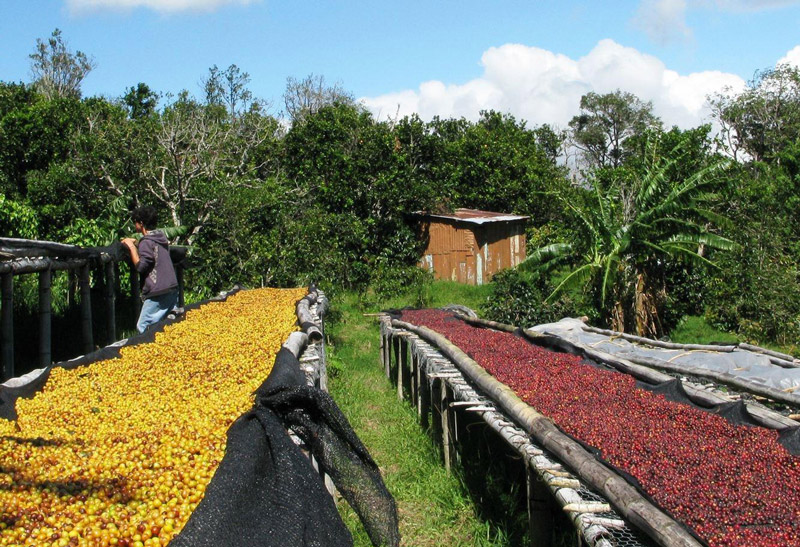
The names of the production areas surrounding the cities of Ghimbi and Lekempti often merge to appear as Lekempti being the capital of this region, but the coffee beans using this name may come from Ghimbi city, which is 100 kilometers away.
The taste is similar to the absence of jasmine tea fragrance, with a bitter taste and a lack of uplifting Hara. It is slightly sour and has a slight fruity and alcoholic aroma, but slightly inferior to Hara. However, it has a good texture and viscosity, so the beans in the Jinbi area are jokingly called "pourman's Harar".
When deeply cultivated, it has a good throat tone and a longer aftertaste, making it one of the ingredients that many bakers like to use as a combination of beans. Of course, it can also be used as a good single product and is suitable for drinking after meals.
5. Haller
Harrar
Altitude: 1500~2100 meters
Harvest period: October to February of the following year
Variety: Native variety
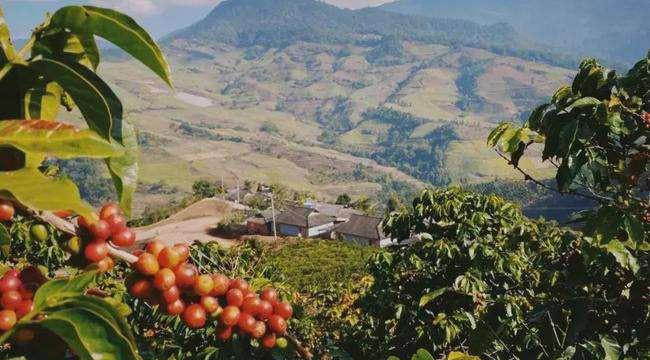
This area is surrounded by the small town of Harrar and is one of the oldest coffee producing regions in Ethiopia.
For a long time, the Harrar production area has maintained a good reputation, even though the coffee taste after sun treatment may feel impure, with a woody soil aroma to a distinct blueberry fruit aroma.
The unique taste of coffee in this area often leaves a deep impression on coffee professionals, and many people believe that this coffee producing region has opened their eyes to the diversity of flavors in the cup.
6. Yirgacheffe
Altitude: 1750~2200 meters
Harvest period: October to January of the following year
Variety: Native variety

The flavor of Yegashefe's origin is generally rich in jasmine, lemon, peach, almond sweetness, and tea. Many washed coffees from Yegashefe have explosive aromas, rich citrus and floral notes, and a light and elegant taste.
The Yegashefe production area is also a large production area. The common ones in China that belong to the Yegashefe production area are:
-Misty Valley, Yegashefe Misty Valley
-Aricha Yejia Xuefei Arijia
-Wenago Yejia Xuefei Weina Guo
-Dormorso Yegashefe Dumesol
-Konga Yegaxuefei Konga
-Kocherer Yegashefe Kochir (Kochale)
-Chelelektu Yejia Xuefei Snow Cold Picture
-Gutiti, Yega, Sheffield, Guoding Ding
Yegashefe coffee farmers are usually members of the Yegashefe Coffee Farmers Cooperative Union (YCFCU), which consists of 23 different member cooperatives, including over 40000 farmers. Some of the more famous cooperatives include Konga Cooperative, Woka Cooperative, Guodingding Cooperative, Kochir, Red Cherry Plan, and so on.
|